Carpenter Bee Control in Rochester: How to Stop Wood Damage Before It Spreads
Learn How they Damage Wood, Why DIY Fails, and How Professional Control Prevents Costly Repairs

Carpenter bees are often mistaken for harmless bumblebees, but their behavior tells a very different story. While they may look slow-moving and non-aggressive, carpenter bees can cause significant damage to homes throughout Rochester and Monroe County. Their habit of drilling into wood to create nesting tunnels puts decks, siding, fascia boards, fences, and other structural elements at risk.
Many homeowners ignore carpenter bees at first, assuming the damage is minimal or seasonal. Unfortunately, carpenter bee infestations often return year after year, expanding tunnel systems and weakening wood over time. Without proper intervention, what starts as a few small holes can become widespread structural deterioration.
This guide explains how carpenter bees affect Rochester homes, how to identify early warning signs, why DIY treatments often fail, and how professional carpenter bee control protects your property long-term.
Why Carpenter Bees Are Common in Rochester
Rochester’s mix of older homes, wooded neighborhoods, and seasonal weather makes the area especially attractive to carpenter bees. These insects prefer untreated or weathered wood and are commonly found around decks, pergolas, porches, eaves, window trim, sheds, and barns.
Carpenter bees become active in spring as temperatures rise. Males emerge first and hover aggressively near structures, while females begin drilling nesting tunnels shortly afterward. Each year, bees often return to the same locations, expanding existing tunnels rather than starting new ones.
Homes with exposed wood, peeling paint, or moisture damage are particularly vulnerable. Once a nesting site is established, carpenter bees can attract additional insects and even woodpeckers, which cause further damage by tearing into wood to reach larvae.
The Damage Carpenter Bees Cause
Unlike termites, carpenter bees do not eat wood. Instead, they excavate it to create nesting galleries. A single tunnel may extend several inches into the wood before turning and branching out. Over time, repeated nesting weakens structural integrity.
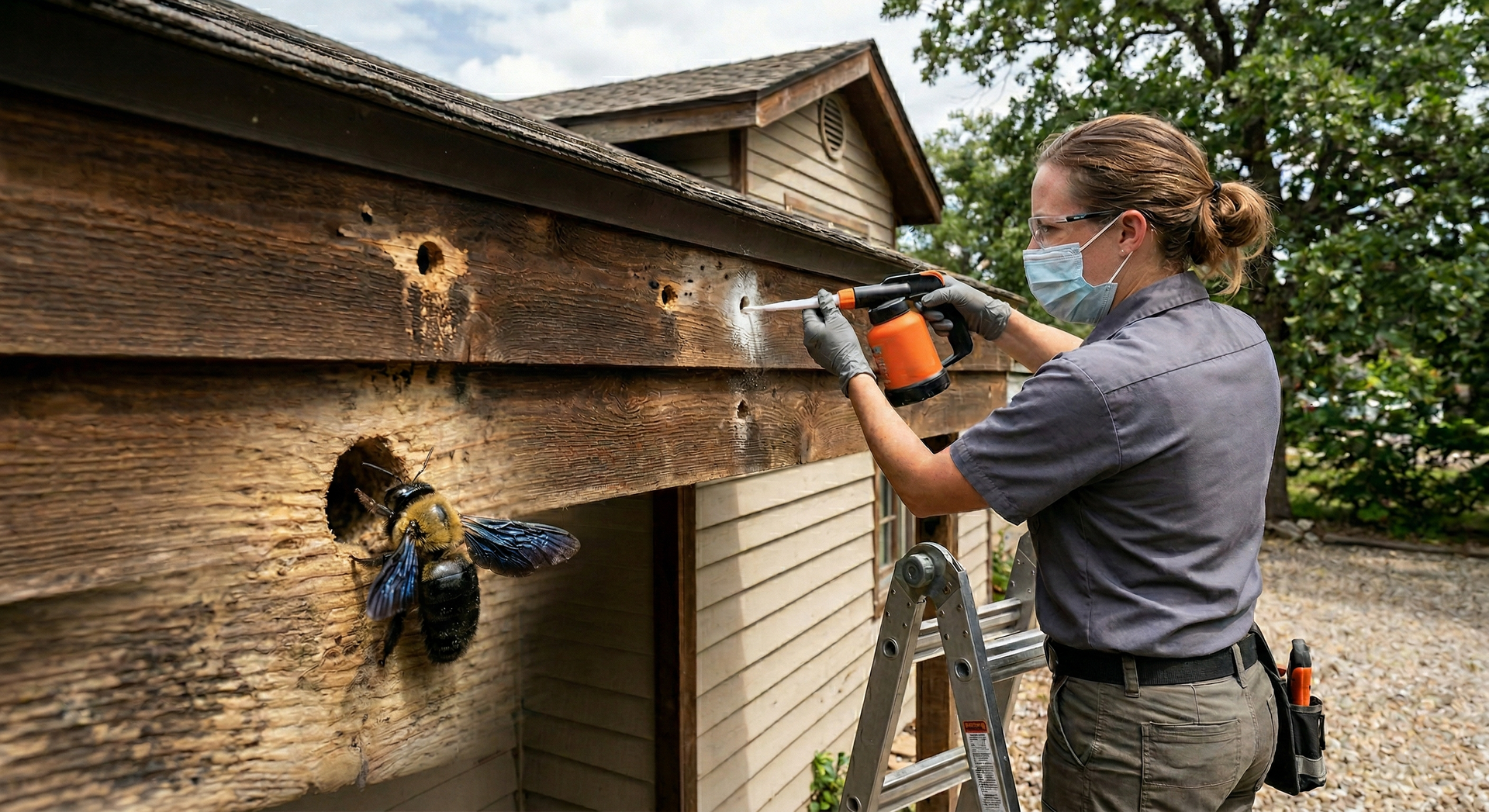
The damage often begins subtly with small, perfectly round holes about the size of a dime. Beneath these holes, homeowners may notice piles of sawdust-like debris, known as frass.
As tunnels expand, wood becomes more vulnerable to moisture, rot, and decay. Deck railings, support beams, and fascia boards are particularly at risk. In severe cases, structural repairs may be required to replace compromised wood.
Carpenter bee damage also lowers curb appeal and property value, especially if holes and staining are visible from the exterior.
Signs of a Carpenter Bee Infestation
Early identification helps limit damage. One of the most obvious signs is the presence of large, black-and-yellow bees hovering near wood surfaces, especially in spring and early summer.
Perfectly round holes in wood, often located on the underside of boards, are another clear indicator. These holes are typically found on decks, eaves, or trim rather than flat surfaces.
Wood shavings or powder beneath holes suggest active tunneling. Homeowners may also hear faint buzzing or scraping sounds inside wood during nesting periods.
Woodpecker damage is another warning sign. Birds are attracted to carpenter bee larvae and may peck holes into wood, causing even more destruction.
Why DIY Carpenter Bee Control Often Fails
Many homeowners attempt carpenter bee control using sprays, dusts, or home remedies. While these methods may kill individual bees, they rarely eliminate the infestation.
Surface sprays often fail to reach larvae hidden deep inside tunnels. Plugging holes without treating tunnels traps larvae inside, allowing bees to emerge later or die inside the wood, creating odor and decay issues.
Over-the-counter products may also lack residual protection, allowing new bees to return the following season. Because carpenter bees are highly site-loyal, untreated wood remains attractive year after year.
Without addressing nesting tunnels and preventing re-entry, carpenter bee problems persist.
How Professional Carpenter Bee Control Works
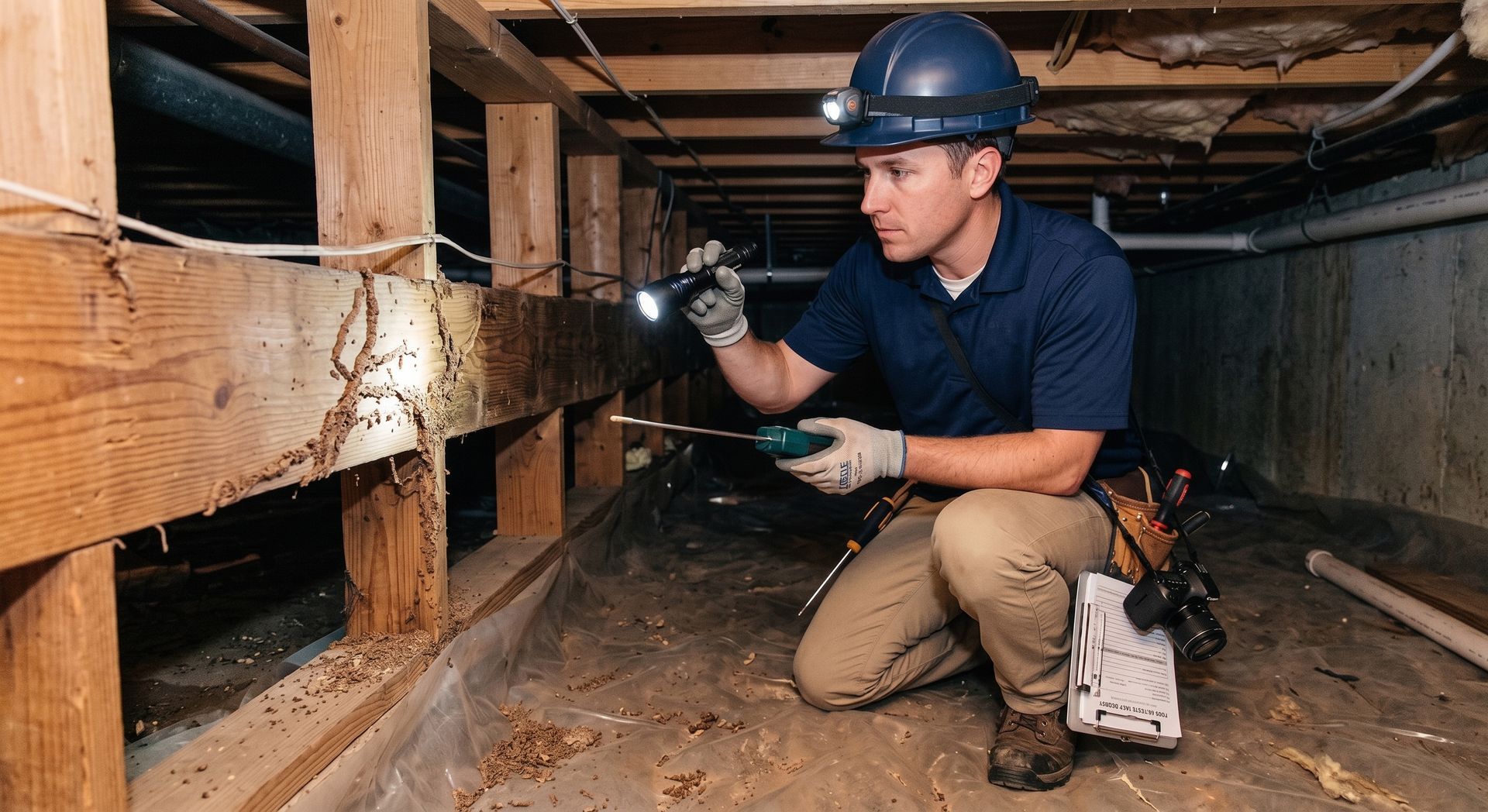
Professional carpenter bee control focuses on elimination, treatment, and prevention. The process begins with a thorough inspection to identify active nests, tunnel locations, and vulnerable wood surfaces.
Targeted treatments are applied directly into tunnels using professional-grade products designed to eliminate larvae and adult bees. These treatments penetrate deep into nesting galleries, ensuring complete control.
After treatment, tunnels are properly sealed using materials that discourage future nesting. Unlike DIY plugging, professional sealing is done only after active bees and larvae are eliminated.
Preventive treatments may also be applied to exposed wood surfaces to repel carpenter bees during future seasons. These treatments create a protective barrier without harming beneficial pollinators.
The Role of Wood Maintenance in Prevention
Maintaining wood surfaces plays a critical role in carpenter bee prevention. Painted or sealed wood is far less attractive to carpenter bees than bare or weathered wood.
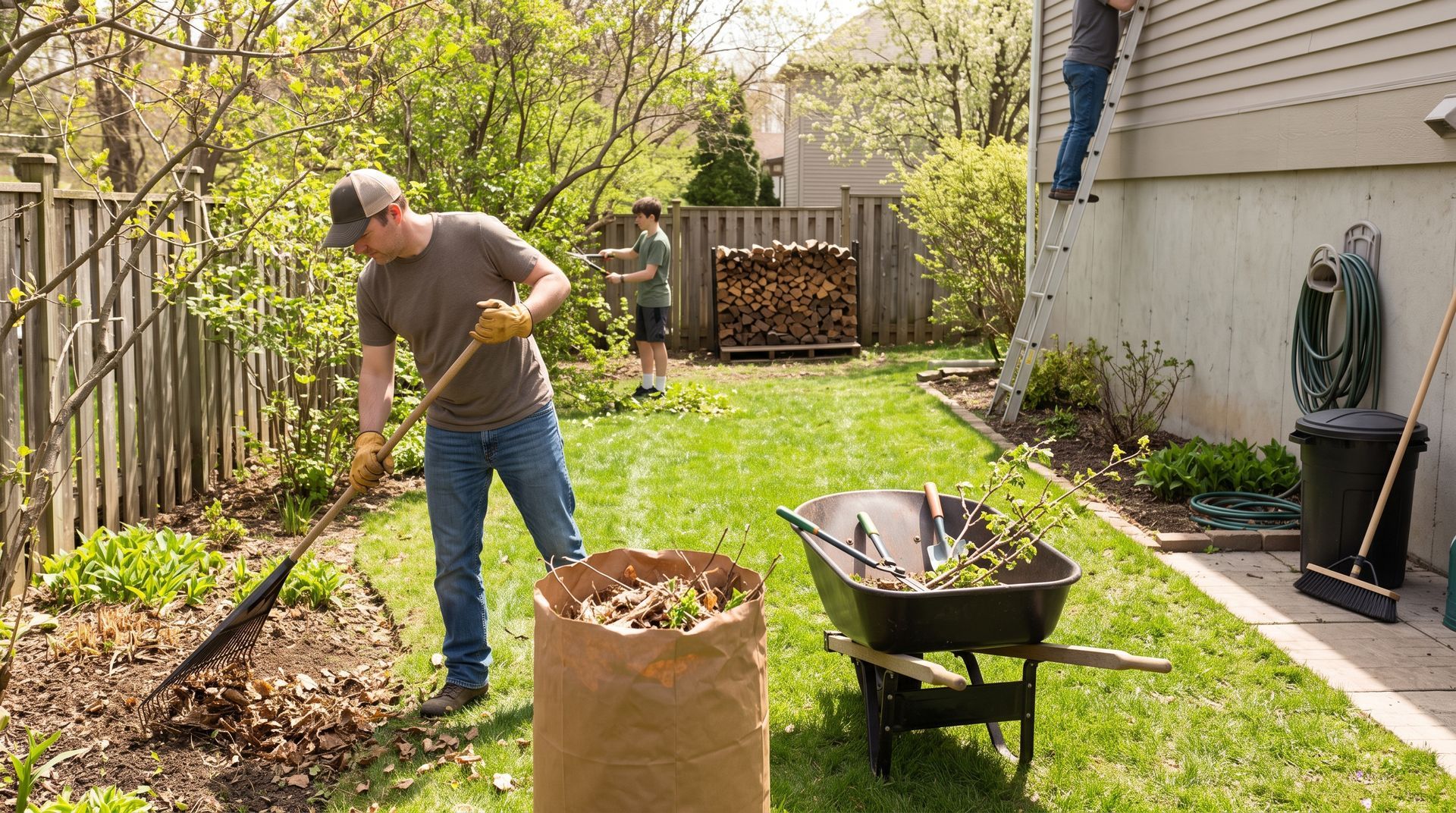
Regularly inspecting decks, trim, and siding for peeling paint, cracks, or moisture damage helps reduce nesting opportunities. Replacing rotted boards and sealing exposed edges further discourages bees.
For rural properties, barns, sheds, and fencing should also be included in maintenance plans, as carpenter bees frequently target these structures.
Seasonal Patterns of Carpenter Bee Activity
Carpenter bee activity in Monroe County typically begins in early spring and peaks through early summer. During this time, bees mate, nest, and lay eggs. Late summer activity may continue as new adults emerge.
Although carpenter bees are less active in fall and winter, damage remains. Addressing infestations during or immediately after peak season helps prevent return activity the following year.
Preventive treatments applied in early spring are especially effective for homes with a history of carpenter bee problems.
Why Ignoring Carpenter Bees Leads to Bigger Problems
Carpenter bees rarely leave on their own. Untreated infestations grow worse over time as tunnels expand and new generations return.
Structural weakening, moisture intrusion, wood rot, and secondary damage from birds all contribute to rising repair costs. What could have been a simple treatment can turn into extensive restoration if ignored.
Addressing carpenter bees early protects both the structure and appearance of the home.
FAQs
Are carpenter bees aggressive?
Male carpenter bees may hover and act territorial but cannot sting. Females can sting but rarely do unless handled.
Do carpenter bees damage painted wood?
They strongly prefer bare or weathered wood. Painted and sealed surfaces are much less attractive.
Will carpenter bees return every year?
Yes, if nesting sites are not properly treated and sealed, carpenter bees often return to the same locations.
Final Thoughts
Carpenter bees may look harmless, but the damage they cause can be serious and long-lasting. For Rochester homeowners, early identification, professional treatment, and proper wood maintenance are key to preventing costly repairs.
With professional carpenter bee control, homes can remain protected season after season, preserving both structure and appearance.